
The Nordic Sleep Method: How to Sleep Deeply All Winter
Reading Time 9 minutes
Picture this: it's the middle of January, the kind of cold that bites through your jacket. And yet, somehow, people in Norway and Denmark are sleeping better than most of us do on a mild Tuesday in May. How? They've been quietly perfecting a set of sleep habits for generations—habits that modern science is only now catching up to.
The Nordic sleep method isn't one single trick. It's a layered approach rooted in centuries of Scandinavian tradition, blended with what researchers now understand about temperature, light, and the biology of deep sleep. If you're someone who dreads the long, dark winter nights—or if you simply can't seem to stay asleep once the mercury drops—this method might be exactly what you've been missing.
Let's break it all down, step by step, so you can start sleeping like a Scandinavian this winter.
Why Winter Wrecks Your Sleep in the First Place
Before we dive into the Nordic sleep method, it helps to understand why winter sleep feels so different. It's not just in your head.
During the shorter days of winter, your body gets far less exposure to natural sunlight. That reduced light signals your brain to produce more melatonin—the hormone that makes you feel sleepy—earlier in the evening. At the same time, levels of serotonin, which plays a role in mood and alertness, drop significantly during the darker months. Research published in PMC (National Center for Biotechnology Information) confirms that the rate of serotonin turnover in the human brain is lowest in winter and rises with increased light exposure.
The result? Your circadian rhythm—your body's internal clock—drifts out of sync. You might feel exhausted by 4 p.m. and wide awake at midnight. This isn't a flaw in your system. It's your biology responding to ancient environmental cues. The good news? The Nordic sleep method works with those cues, not against them.
The Cold Room Secret That Actually Works
Here's where things get interesting—and maybe a little counterintuitive. One of the most well-known pillars of the Nordic sleep method is sleeping in a noticeably cool bedroom. In Denmark and Norway, it's common practice to crack a window before bed, even during freezing winter nights, or simply keep the bedroom several degrees cooler than the rest of the house.
Why would sleeping in the cold improve your rest? The science behind this is surprisingly compelling. A large-scale study involving over 34,000 participants, referenced in Psychology Today, found that sleep quality tends to decline as bedroom temperatures creep above 60°F (16°C). Most sleep researchers now agree that the ideal bedroom temperature falls somewhere between 60°F and 67°F (15°C to 19°C).
Here's the mechanism at work: about two hours before you naturally fall asleep, your core body temperature begins to drop. This cooling is a biological signal that tells your brain it's time to shift into sleep mode. A cool room supports that natural process. A warm room fights it.
Dr. Markus Schmidt, a sleep medicine specialist and neuroscientist at the University of Bern, has spent years studying exactly how temperature and sleep interact. His landmark 2019 research, published in Current Biology, identified a group of neurons in the hypothalamus—nicknamed "Goldilocks neurons"—that actively increase REM sleep when the room temperature hits the sweet spot of comfort. Too hot, too cold, and your brain simply won't let you drop into deep, restorative sleep.
"The amount and timing of REM sleep are finely tuned with our immediate environment when we do not need to thermoregulate." — Dr. Markus H. Schmidt, University of Bern
The takeaway? Don't be afraid of a slightly chilly bedroom. Pile on an extra blanket if you need to—but let the room stay cool. That contrast between the crisp air and your warm cocoon of bedding is, in many ways, the foundation of the Nordic sleep method.
The Warm Bath Trick: Heating Up to Cool Down
This next piece of the Nordic sleep method sounds almost paradoxical—but it's backed by some of the strongest sleep research out there. Scandinavians have long practiced taking a warm bath or shower in the early evening before bed, and it turns out there's a very precise biological reason why this works.
Researchers at the University of Texas at Austin conducted a thorough review of over 5,300 studies on the topic. Their findings, published in Sleep Medicine Reviews, were clear: bathing in water between 104°F and 109°F (40–42.5°C) about 90 minutes before bedtime can shorten the time it takes you to fall asleep by an average of 10 minutes and significantly improve overall sleep quality.
The reason is elegant. Warm water draws blood flow to your hands and feet, which temporarily raises your skin temperature. Once you step out of the bath, your body rapidly cools back down—and that temperature drop is precisely the signal your brain uses to initiate sleep. You're essentially giving your body a head start on the natural cooling process.
For the Nordic sleep method, timing matters more than duration. Even a 10-minute warm shower, taken about an hour to 90 minutes before bed, can make a meaningful difference. Think of it as priming your system for the cool bedroom that waits for you.
Two Duvets, One Bed: The Scandinavian Sleep Method Explained
If you share a bed with a partner, you've probably experienced the classic bedtime battlefield: one of you is shivering while the other is overheating. The Nordic sleep method offers a beautifully simple fix that's been standard practice in Sweden, Norway, and Denmark for generations.
Instead of sharing a single duvet or comforter, each person sleeps under their own. Two beds? No. Two blankets? Yes. It's that straightforward.
The Sleep Foundation explains that this approach allows each sleeper to regulate their own body temperature independently throughout the night, eliminating one of the most common sources of nighttime disruption. Research consistently shows that sleep disruptions—even small ones—fragment your sleep cycles and prevent you from reaching the deepest, most restorative stages.
The benefits go beyond temperature. With your own duvet, you can toss and turn without disturbing your partner. You can cocoon yourself tightly or let your feet breathe. The freedom translates directly into fewer micro-awakenings and longer stretches of uninterrupted sleep—exactly what the Nordic sleep method is designed to deliver.
- Choose duvets with different warmth ratings based on each person's preference
- Opt for natural materials like down, wool, or cotton for breathability
- Skip the top sheet if you both find it restrictive—this is the traditional Scandinavian approach
- Give it at least one week before deciding if it works for you
Light Is Everything: Fighting the Winter Dark
The Nordic sleep method isn't just about what happens at night—it's about what you do during the day, too. And in a season defined by darkness, light exposure becomes one of the most powerful tools at your disposal.
Here's why this matters so much for sleep. Your circadian rhythm is primarily regulated by light hitting specialized cells in your eyes called intrinsically photosensitive retinal ganglion cells. These cells send signals directly to your brain's master clock, the suprachiasmatic nucleus (SCN), which controls when you feel awake and when you feel sleepy.
In winter, when natural light is scarce, this system can fall out of alignment. Researchers at the National Institutes of Health have established that bright light therapy—using a device that emits around 10,000 lux of light—for about 30 minutes in the morning can meaningfully reset your circadian rhythm. A pooled analysis of light therapy studies found that over 53% of individuals with seasonal sleep disruption achieved full remission with consistent morning light exposure.
Scandinavians have understood this instinctively for centuries. Many prioritize getting outside early in the morning, even on gray winter days, to catch whatever pale light is available. Some use sunrise alarm clocks that simulate the gradual brightening of dawn. The concept is simple: give your brain the light signal it needs to know that daytime has arrived, and your sleep at night will follow naturally.
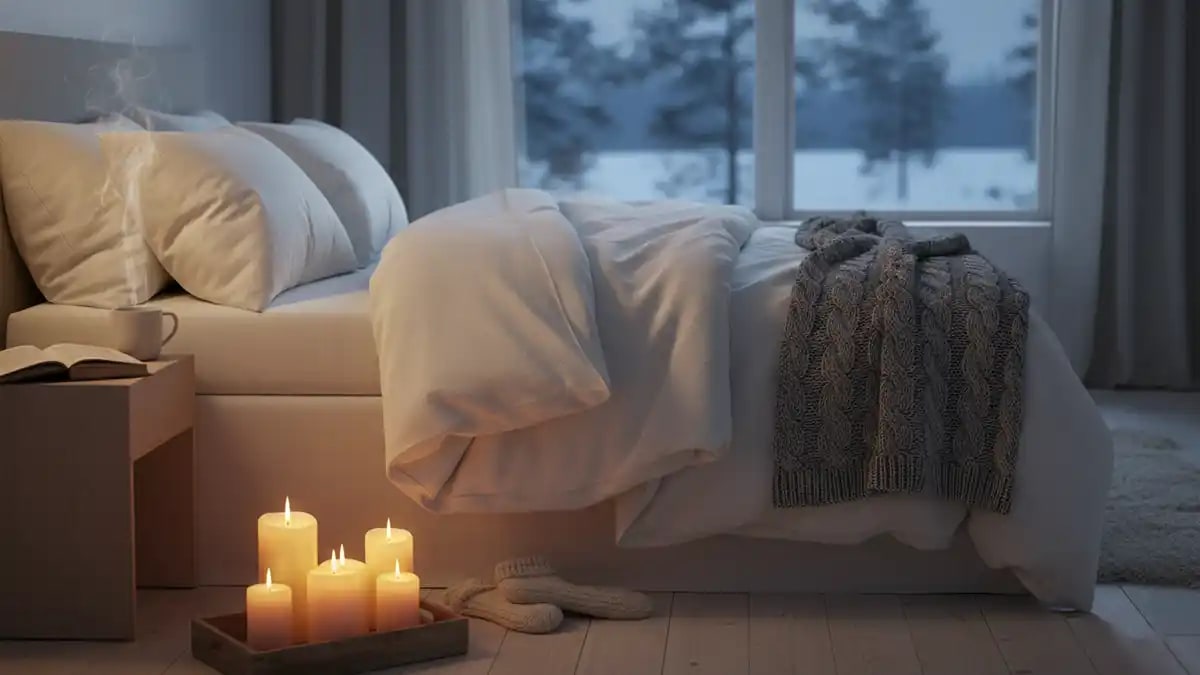
On the flip side, the Nordic sleep method also pays close attention to evening light. Danes are famous for their love of candles and warm, dim lighting in the home—a practice rooted in the concept of hygge (pronounced "hoo-gah"), which roughly translates to coziness and contentment. Psychotherapist Kamalyn Kaur notes that low, warm lighting in the evening signals safety to the nervous system and supports melatonin production, easing the transition into sleep.
Building Your Nighttime Wind-Down Ritual
One of the quieter but most effective elements of the Nordic sleep method is the idea of a consistent wind-down ritual. Scandinavians don't just fall into bed at the end of the day—they build a deliberate buffer zone between the busyness of life and the calm of sleep.
This ritual typically includes several layers, and you can customize it to fit your own life:
- Warm bath or shower about 90 minutes before bed (as discussed above)
- Dim the lights in your home at least an hour before sleep—swap overhead bulbs for lamps or candles
- Put screens away at least 30 minutes before bed; blue light from phones and laptops suppresses melatonin production
- Sip something warm—herbal tea like chamomile or a warm glass of milk can gently nudge your body toward relaxation
- Read a book or sit quietly in a cozy corner (what Danes call a hyggekrog)—a dedicated, soft space designed purely for unwinding
The power of ritual isn't just psychological—though that matters too. Repetition teaches your nervous system to recognize these cues as a signal that sleep is coming. Over time, your body begins preparing for sleep before you even climb into bed. That's the Nordic sleep method working as intended: not as a single hack, but as a system.
The Role of Fresh Air and Outdoor Exposure
Don't underestimate the importance of stepping outside during winter, even when the thought of cold air makes you want to stay buried under your blankets. The Nordic sleep method emphasizes daily exposure to the outdoors—not just for light, but for the air itself.
Scandinavians have a long tradition of airing out their bedding regularly. Hanging duvets and pillows outside in the cold, dry winter air removes moisture, reduces dust mites, and refreshes the sleep environment in ways that indoor washing simply can't replicate. Some Nordic parents even let their babies nap outside in winter, a tradition that reflects a deep cultural trust in the restorative power of fresh air.
Beyond bedding, spending even 20 minutes outside during daylight hours—walking, sitting with a coffee, simply breathing—can positively influence both your mood and your sleep-wake cycle. The combination of natural light and physical movement during the day creates a stronger contrast between your daytime alertness and your nighttime sleepiness, making it easier to fall and stay asleep once evening arrives.
Putting It All Together: Your Nordic Sleep Method Checklist
The Nordic sleep method works best when you layer these habits together rather than cherry-picking just one. Here's a practical framework you can start using tonight:
- Morning: Get outside or use a 10,000-lux light therapy device for 20–30 minutes after waking
- Afternoon: Avoid caffeine after 2 p.m.; step outside for fresh air and movement
- Early Evening: Take a warm bath or shower around 7–8 p.m. (about 90 minutes before bed)
- Evening: Dim your lights, put away screens, and spend 20–30 minutes in a quiet wind-down ritual
- Bedtime: Keep your bedroom between 60–67°F; use your own duvet if you share a bed; let the room stay cool while you stay warm under the covers
This isn't about perfection. Miss a step here and there—that's fine. The Nordic sleep method is a lifestyle, not a checklist you have to complete flawlessly every night. Start with the changes that feel most doable, and build from there. Most people notice a difference within one to two weeks of consistent practice.
A Quick Word on Safety and Individual Differences
While the Nordic sleep method is safe for most healthy adults, a few things are worth keeping in mind. People with heart conditions or cardiovascular sensitivities should be cautious about very cold bedroom temperatures—research indicates that room temperature should ideally stay above 50°F (10°C) to avoid putting unnecessary strain on the cardiovascular system during sleep.
If you have chronic insomnia, sleep apnea, or other diagnosed sleep disorders, it's a good idea to talk with your doctor before making significant changes to your sleep environment. The Nordic sleep method complements—but shouldn't replace—professional guidance for serious sleep issues.
Everyone's body responds a little differently to temperature, light, and routine. Pay attention to how your body reacts and adjust accordingly. The best version of this method is the one that actually works for you.
Frequently Asked Questions About the Nordic Sleep Method
What exactly is the Nordic sleep method?
The Nordic sleep method is a collection of sleep practices originating from Scandinavian countries like Denmark, Norway, and Sweden. It combines a cool bedroom environment, warm pre-bed bathing, separate duvets for couples, intentional light exposure during the day, and a calming nighttime wind-down ritual. These habits work together to support deeper, more restorative sleep—especially during the long, dark winter months.
What is the best bedroom temperature for deep sleep?
Most sleep researchers agree that the ideal bedroom temperature falls between 60°F and 67°F (15°C to 19°C). A large study of over 34,000 participants found that sleep quality declines noticeably when bedroom temperatures rise above 60°F. Keeping the room cool supports your body's natural pre-sleep cooling process and helps your brain shift into deeper sleep stages more efficiently.
Why do Scandinavians take a warm bath before bed if the goal is to cool down?
It's actually a brilliant biological trick. Warm water draws blood to your skin's surface and temporarily raises your body temperature. Once you get out of the bath, your body cools down rapidly—and that temperature drop is one of the primary signals your brain uses to initiate sleep. Research from the University of Texas at Austin found that bathing in water around 104–109°F about 90 minutes before bed can cut sleep onset time by roughly 10 minutes.
Do I actually need two duvets if I sleep alone?
If you sleep solo, two duvets aren't necessary. The two-duvet approach—often called the Scandinavian sleep method—is specifically designed to solve the temperature and movement conflicts that come with sharing a bed. If you sleep alone, simply choosing a duvet that matches your personal temperature preference and keeping your bedroom cool will achieve similar results.
How does light therapy help with winter sleep?
In winter, reduced sunlight exposure can throw your circadian rhythm out of alignment, making it harder to fall asleep at night and feel alert during the day. Light therapy devices that emit around 10,000 lux of bright light can simulate the sun's effect on your brain when used for 20–30 minutes in the morning. Studies show this can help reset your internal clock and improve both mood and sleep quality during the darker months.
What is hygge and how does it relate to sleep?
Hygge is a Danish concept that roughly translates to coziness, comfort, and contentment. In the context of sleep, it refers to creating a warm, inviting atmosphere in the evening—think dim lighting, soft blankets, warm drinks, and quiet activities like reading. These elements help calm your nervous system and signal to your brain that it's time to wind down, making the transition to sleep feel more natural and less effortful.
Is it safe to sleep in a cold room during winter?
For most healthy adults, sleeping in a cool room (60–67°F) is not only safe but beneficial for sleep quality. However, people with heart conditions or cardiovascular sensitivities should be more careful, as research suggests keeping the room above 50°F (10°C). If you have any underlying health concerns, check with your doctor before making significant changes to your sleep environment temperature.
How long does it take to see results from the Nordic sleep method?
Most people begin noticing improvements within one to two weeks of consistently practicing the key habits—cool bedroom, warm pre-bed bath, morning light exposure, and a wind-down routine. Like any lifestyle change, consistency matters more than perfection. The more regularly you apply these habits, the stronger the effect on your sleep quality over time.
Can the Nordic sleep method help with seasonal affective disorder (SAD)?
While the Nordic sleep method isn't a treatment for SAD, several of its core elements—particularly morning light therapy and the hygge-inspired evening routine—align closely with evidence-based approaches used to manage SAD symptoms. If you suspect you have SAD, it's important to consult a healthcare provider, but incorporating more light exposure and calming evening rituals can meaningfully support your well-being during winter.
Do I need to buy special equipment or products to try this method?
Not necessarily. The most impactful changes—cool bedroom, warm bath, morning sunlight, and a quiet wind-down routine—cost little to nothing. A light therapy box ($30–$80) can be helpful if you live somewhere with very limited winter sunlight, and choosing natural-fiber bedding (cotton, wool, down) can improve comfort, but these are optional upgrades rather than requirements.
Legal Disclaimer: The information provided in this article by The Healthful Habit is for educational and informational purposes only. It is not intended to replace professional medical advice, diagnosis, or treatment. Always seek the guidance of your physician or another qualified healthcare professional before starting any new diet, supplementation, or exercise program, especially if you have a preexisting medical condition. The author and The Healthful Habit website do not assume responsibility for any actions taken based on the information presented in this blog. Individual results may vary, and what works for one person may not work for another.
Affiliate Disclosure: As an Amazon Associate, I earn from qualifying purchases. Some articles on this blog contain affiliate links to Amazon.com, and if you buy through them I may receive a small commission at no additional cost to you. Every product here passes through the same filter I use for the articles themselves: peer-reviewed research first, independent testing when it exists, real-world use over marketing claims. When a specific recommendation has clinical backing or a professional endorsement behind it, I point that out in the post itself, not as a blanket promise here.