
Donald Trump Using a Walker? Here's What We Actually Know
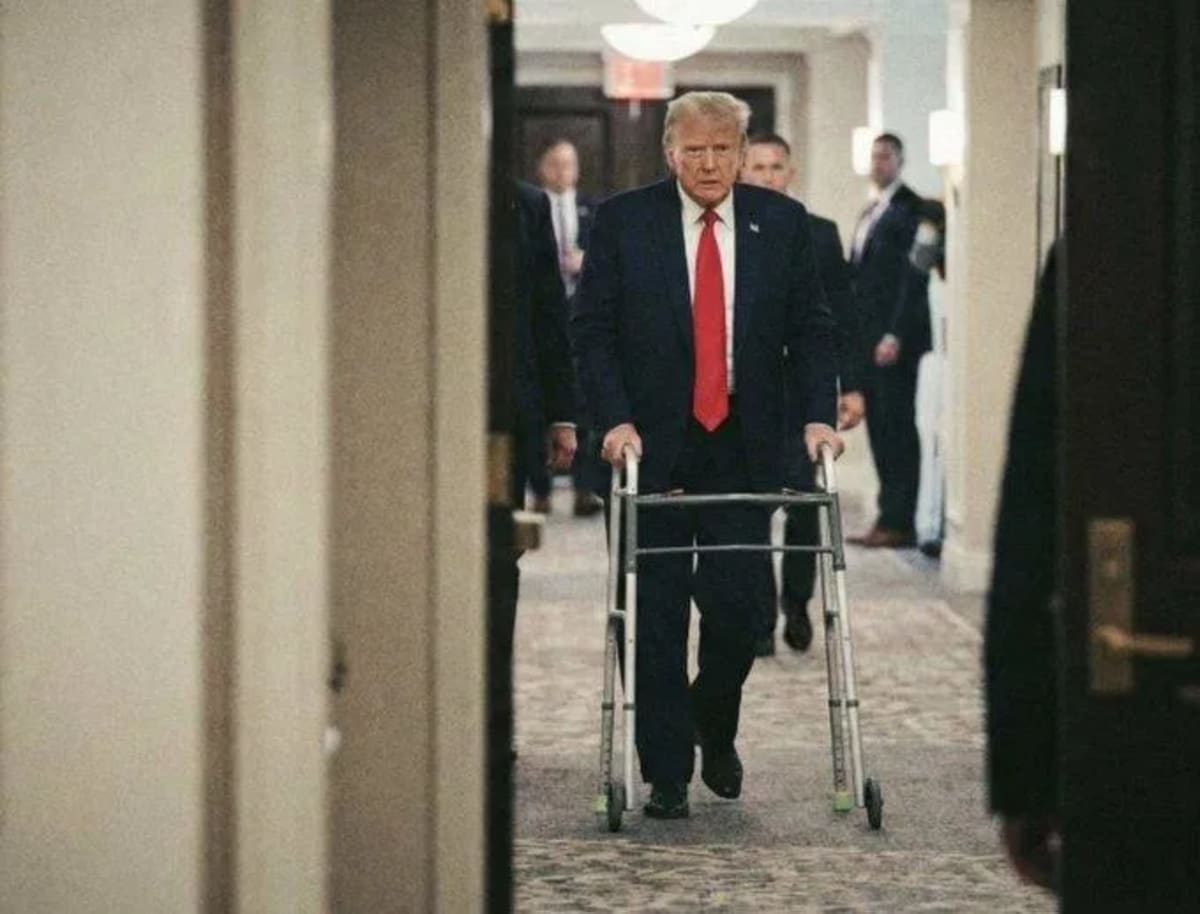 |
| Image source: Lead Stories screenshot of X.com |
You've probably seen it by now—a photo circulating on social media showing President Donald Trump hunched over a walker in a White House hallway. The image spread like wildfire across X (formerly Twitter), with users claiming it was taken right after Trump signed an executive order on artificial intelligence regulation.
But here's the thing: the photo isn't real. Let's dive into what actually happened, why people believed it, and what this means for health information online.
The Viral Image That Fooled Thousands
On December 11, 2025, an image started making rounds online showing Trump appearing to use a mobility walker in what looked like a White House corridor. Some versions even showed a gold-plated walker, adding to the drama. The posts racked up hundreds of thousands of views within hours, sparking heated debates about the 79-year-old's health and fitness for office.
The timing seemed perfect for conspiracy theorists. Trump had recently posted on Truth Social defending his work ethic and health, stating he'd "stopped Eight Wars, saving many millions of lives in the process." This defensive stance only fueled speculation further.
What Fact-Checkers Discovered
Multiple fact-checking organizations jumped on the viral image, and their findings were clear: the photo is almost certainly AI-generated or digitally manipulated. No credible news organizations confirmed Trump using a walker in December 2025, and experts found inconsistencies in the walker's structure, carpet pattern, and lighting that pointed to digital fabrication.
Even Grok, X's own AI assistant, flagged the image as suspicious when users asked for verification. The reality check came swiftly, but not before millions had already seen and shared the doctored image.
Why People Were Quick to Believe
This wasn't just random speculation. There's been ongoing public interest in Trump's health, particularly as he's now the oldest person to assume the U.S. presidency. At 79 years old when inaugurated in January 2025, he surpassed Ronald Reagan's previous record.
Some legitimate health concerns have been documented. Between December 2024 and March 2025, bruises were spotted on multiple occasions on Trump's hands, which generated speculation about his health. Additionally, critics have pointed out that Trump hasn't released comprehensive medical records since 2015, unlike typical presidential candidates.
Recent videos showing Trump's gait also sparked discussions. Social media users analyzed footage of him walking, claiming to see unusual patterns or difficulty with mobility. However, these observations weren't backed by medical professionals or official statements.
The Real Health Picture
While the walker photo was fake, questions about presidential health are legitimate. Trump's physical examination in April 2025 at Walter Reed National Military Medical Center concluded he was in "excellent health" and "fully fit" to serve as commander-in-chief. The exam included the Montreal Cognitive Assessment test (MoCA), which he reportedly passed.
It's worth noting that health transparency has become a hot-button issue for aging politicians across the board. Both major parties face scrutiny when their candidates are in their late 70s or early 80s, as Americans naturally wonder about their leaders' ability to handle the demanding job.
"The American people deserve the truth about the health of their president. We've all seen the same videos, the same erratic behavior, the same troubling lapses in memory and focus."
This statement from Congresswoman Jasmine Crockett, who called for clarity regarding Trump's health and cognitive fitness in a formal letter to the White House Physician, reflects broader concerns that many voters share, regardless of political affiliation.
The Danger of AI-Generated Health Misinformation
Here's what makes this incident particularly troubling: we're entering an era where fake health images look incredibly convincing. AI technology has advanced to the point where creating realistic-looking photos of public figures in compromising health situations takes minimal effort.
This type of misinformation doesn't just spread rumors—it can influence elections, stock markets, and international relations. When people believe a world leader is seriously ill or incapacitated, it creates real-world consequences.
How to Spot Fake Health Images
Want to avoid falling for the next viral health hoax? Keep these tips in mind:
- Check multiple reputable sources before sharing. If major news outlets aren't covering it, that's a red flag.
- Look for official statements from the person's office or verified representatives.
- Examine image quality carefully. AI-generated photos often have subtle inconsistencies in lighting, shadows, or proportions.
- Consider the source. Who posted it first? Are they known for reliable reporting or sensationalism?
- Use reverse image search to see if the photo appears elsewhere or has been manipulated.
What This Means for Political Discourse
The walker photo incident highlights a bigger challenge we're facing: how do we have honest conversations about politician health when fake images muddy the waters? Legitimate questions about age, stamina, and cognitive function get drowned out by obviously false claims, making it harder to discuss real concerns.
Medical professionals emphasize that aging affects everyone differently. Some people in their 80s maintain sharp minds and robust health, while others face significant challenges. What matters is transparency, regular medical evaluations, and honest communication with the public.
Moving Forward
As AI technology continues advancing, we'll likely see more sophisticated fake health images and videos. The solution isn't just better detection tools—it's media literacy. We need to slow down, verify before sharing, and demand evidence for extraordinary claims.
Whether you support Trump or oppose him, you deserve accurate health information about your leaders. That means being skeptical of viral images, appreciating legitimate fact-checking efforts, and holding both politicians and media accountable for transparency.
The fake walker photo serves as a wake-up call. In our rush to confirm our suspicions or score political points, we can easily become vectors for misinformation. The antidote? A healthy dose of skepticism combined with respect for verified facts.
Frequently Asked Questions
Is the photo of Trump using a walker real?
No, the viral photo showing Trump using a walker is not real. Multiple fact-checking organizations determined the image was likely AI-generated or digitally manipulated. No credible news sources confirmed the photo's authenticity.
Why did people believe the walker photo was real?
People were predisposed to believe it due to ongoing speculation about Trump's health at age 79, recent observations of bruising on his hands, and concerns about his mobility in various videos. The photo's realistic appearance also contributed to its credibility.
What is Trump's actual health status?
According to Trump's physical examination at Walter Reed Medical Center in April 2025, he was deemed in excellent health and fully fit to serve as president. The exam included cognitive assessments which he reportedly passed.
Has Trump released his complete medical records?
Trump has not released comprehensive medical records going back to 2015 when he first ran for president, which is less transparent than typical presidential candidates. He did release results from his 2025 physical examination.
How can I identify fake health images of politicians?
Check multiple reputable news sources, look for official statements, examine image quality for inconsistencies, consider the posting source's credibility, and use reverse image search. Be especially skeptical of images that only appear on social media without mainstream news coverage.
Why is presidential health transparency important?
Presidential health transparency helps voters make informed decisions and ensures the person holding the highest office can fulfill the demanding responsibilities. It also prevents misinformation from filling the void left by lack of official information.
What did Trump say about the health speculation?
Trump posted on Truth Social defending his work ethic and health, stating he works longer hours than any previous president and has achieved significant results. He criticized media outlets for what he called fake reports about his health.
Are there legitimate concerns about Trump's age?
At 79, Trump is the oldest person to assume the U.S. presidency. While age-related health questions are legitimate for any politician in their late 70s or 80s, individual health varies greatly, and regular medical evaluations provide the most reliable assessments.
Legal Disclaimer: The information provided in this article by The Healthful Habit is for educational and informational purposes only. It is not intended to replace professional medical advice, diagnosis, or treatment. Always seek the guidance of your physician or another qualified healthcare professional before starting any new diet, supplementation, or exercise program, especially if you have a preexisting medical condition. The author and The Healthful Habit website do not assume responsibility for any actions taken based on the information presented in this blog. Individual results may vary, and what works for one person may not work for another.
Affiliate Disclosure: As an Amazon Associate, I earn from qualifying purchases. Some articles on this blog contain affiliate links to Amazon.com, and if you buy through them I may receive a small commission at no additional cost to you. Every product here passes through the same filter I use for the articles themselves: peer-reviewed research first, independent testing when it exists, real-world use over marketing claims. When a specific recommendation has clinical backing or a professional endorsement behind it, I point that out in the post itself, not as a blanket promise here.