
10 Steps to End Poor Circulation for Good
Reading Time 7 min
10 Steps to End Poor Circulation for Good - 2026 Guide
Your body has about 60,000 miles of blood vessels — enough to circle the Earth more than twice. When everything is working well, this vast network silently delivers oxygen and nutrients to every cell while clearing out waste products. But when poor circulation sets in, that system starts to break down. Cold hands and feet, heavy or swollen legs, tingling, numbness, slow-healing wounds — these are your body's way of waving a red flag.
Here's the good news: poor circulation is one of the most modifiable health challenges you'll face. Science has never been clearer on what actually moves the needle. In this guide, you'll get 10 evidence-based steps — ranked from most impactful to most overlooked — that can genuinely improve your blood flow, reduce symptoms, and protect your cardiovascular system for the long term.
What you'll learn: the real cause of poor circulation, the one food scientists are studying for vascular disease, why compression socks are more powerful than most people think, and the "30-day milestone" that predicts your long-term success.
What Is Poor Circulation and Why Does It Happen?
Poor circulation — medically referred to as impaired peripheral perfusion — occurs when blood flow to parts of your body, particularly the extremities, is reduced or restricted. The underlying causes vary, but the most common include:
- Peripheral artery disease (PAD): Atherosclerosis (plaque buildup) in the arteries of the legs and feet, affecting an estimated 8–12 million Americans
- Chronic venous insufficiency: Weakened or damaged valves in leg veins that allow blood to pool instead of returning to the heart
- Prolonged sedentary behavior: Sitting for hours weakens the calf muscle pump — your legs' built-in venous return system
- Diabetes: High blood sugar damages blood vessel walls and nerves over time
- Raynaud's disease: Excessive vessel narrowing in response to cold or stress
- Obesity: Excess weight increases venous pressure and systemic inflammation
- Smoking: Nicotine causes arterial constriction and accelerates plaque formation
The critical insight most articles skip: poor circulation is rarely a single-cause problem. Most people with significant symptoms have two or three overlapping contributors. That's why a multi-step approach — not a single fix — is what actually works.
The 10-Step Plan to Improve Poor Circulation

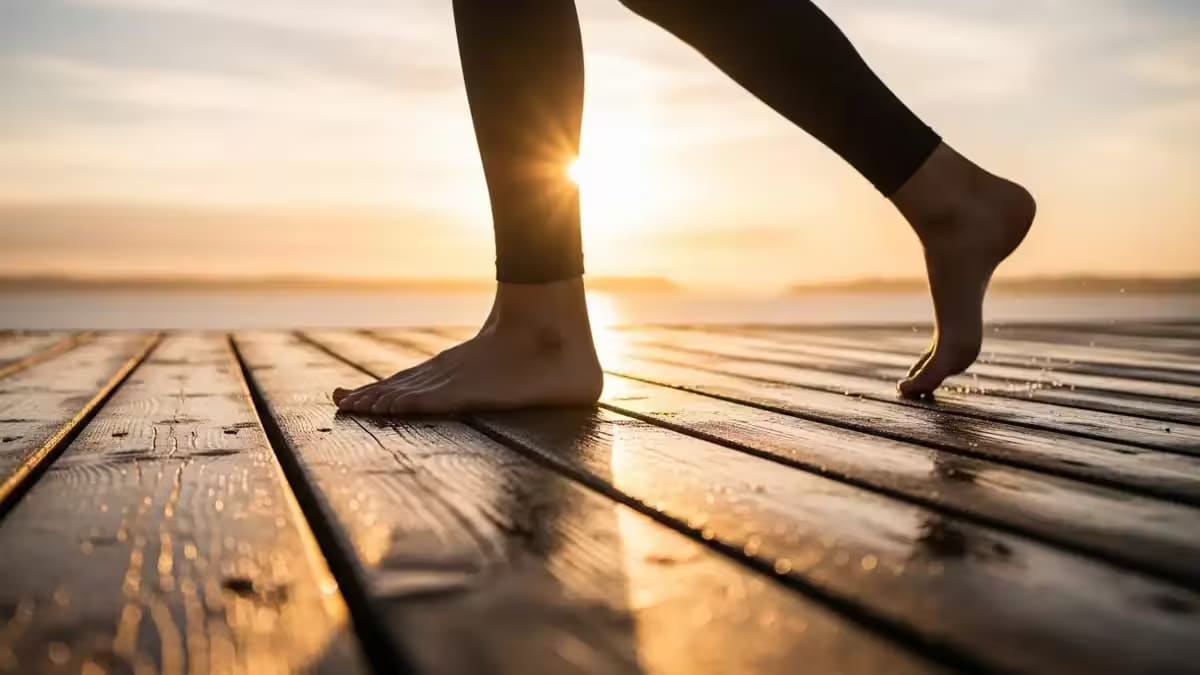
Step 1: Make Walking Non-Negotiable (It Rewires Your Vessels)
If there's one intervention that consistently tops every clinical guideline for poor circulation, it's supervised walking exercise. The 2024 American Heart Association Guideline for the Management of Peripheral Artery Disease (Circulation, 2024) gives structured walking therapy its strongest recommendation for improving walking distance and quality of life in patients with leg circulation problems.
Why does walking work? It does three things simultaneously: it raises your heart rate (moving blood faster through your body), it activates your calf muscle pump (squeezing venous blood back up toward your heart), and — over weeks — it stimulates your arteries to grow new small branches called collateral vessels that literally bypass blocked areas.
The target: 30 minutes of brisk walking (at least 3 mph) five to seven days per week. If that feels like too much, start with 10 minutes and add five minutes each week. The 30-day milestone matters: research consistently shows that those who maintain the habit for 30 days experience measurable improvements in leg blood flow, reduced symptoms, and greater pain-free walking distance.
Step 2: Eat to Build Nitric Oxide (The Vasodilator Your Body Makes)
This is the step most people — and most articles — get wrong. The real key to diet and poor circulation isn't just "eat less fat." It's strategically increasing foods that boost nitric oxide (NO) — a molecule your blood vessel walls naturally produce to relax and widen arteries.
"Nitric oxide plays an essential role in vascular homeostasis... Beetroot, a natural root vegetable, demonstrates significant health benefits through its various bioactive compounds. It is rich in nitrate and betaine, which are metabolized in the body via the nitrate–nitrite–nitric oxide pathway, increasing the bioavailability of NO — an important vasodilator that can improve blood flow and lower blood pressure."
— Narrative Review, ScienceDirect, March 2025
In people with peripheral artery disease, studies published in PubMed show that dietary nitrate supplementation — primarily through beetroot juice — can improve exercise capacity, lower blood pressure, and enhance endothelial function. The mechanism: your mouth converts dietary nitrate → nitrite → NO, which then signals your arteries to dilate.
Foods highest in vascular nitrates: beets, spinach, arugula, kale, Swiss chard, and celery. Aim to include these in at least one meal per day. Beyond nitrates, omega-3 fatty acids (salmon, sardines, walnuts, flaxseeds) reduce vascular inflammation and help prevent platelet aggregation, supporting healthier blood flow at the microscopic level.
| Food | Key Compound | Circulatory Benefit | How to Use |
|---|---|---|---|
| Beets / Beetroot juice | Dietary nitrate | Boosts nitric oxide → vasodilation, lower BP | 250 ml juice or ½ cup roasted beets daily |
| Spinach, arugula, kale | Inorganic nitrate | Improves endothelial function | Large daily salad or sautéed side |
| Fatty fish (salmon, sardines) | Omega-3 (EPA/DHA) | Reduces inflammation, improves blood viscosity | 2–3 servings per week |
| Walnuts, flaxseeds | Omega-3 (ALA) | Anti-inflammatory, anticoagulant effects | Handful of walnuts or 1 tbsp ground flax daily |
| Garlic | Allicin | Reduces platelet aggregation, mild vasodilation | 1–2 raw or cooked cloves per day |
| Dark chocolate (≥70%) | Flavonoids | Improves endothelial function, lowers BP | 1 oz (28g) per day as a treat |
Step 3: Hydrate Strategically — Your Blood Is Over 90% Water
Dehydration thickens your blood, increasing its viscosity and making it significantly harder for your heart to push it through narrow vessels. This is especially impactful for people with already-compromised poor circulation.
The target: at least 8 glasses (64 oz) of water daily, more if you exercise or are in a hot climate. Avoid excess caffeine and alcohol, which act as diuretics and can quietly undermine your hydration status throughout the day. A practical tip: if your urine is darker than pale yellow, you're behind on hydration.
Step 4: Use Compression Therapy Correctly
Compression socks are one of the most underrated tools for poor circulation. They work by applying graduated external pressure — tighter at the ankle, progressively looser toward the knee — that counteracts gravity's tendency to pool blood in your lower legs.
They're not just for post-surgery recovery. Vascular specialists routinely recommend them for:
- People who stand or sit for long hours at work
- Long-haul flights (reduces DVT risk significantly)
- People with varicose veins or chronic venous insufficiency
- Anyone with leg swelling, heaviness, or fatigue by end of day
Compression levels: 15–20 mmHg is appropriate for mild symptoms and prevention; 20–30 mmHg is the clinical standard for moderate venous insufficiency. Ask your doctor which level is right for you before purchasing. Knee-high is usually sufficient unless you have symptoms above the knee.
🛍️ Check current price on Amazon →
Step 5: Elevate Your Legs — The Zero-Cost Circulation Hack
Elevating your legs above heart level is the simplest, most immediate intervention for poor circulation in the lower extremities. It uses gravity in your favor — the same force that works against you all day when you're sitting or standing.
The recommended method: lie on your back with your legs resting against a wall (the legs-up-the-wall pose), or elevate them on pillows above the level of your heart. Aim for 15–20 minutes per day. This reduces venous pressure in your lower legs, improves blood return to the heart, decreases swelling, and can provide immediate relief from the heavy, achy feeling that comes with venous insufficiency.
🛍️ Check current price on Amazon →
Step 6: Quit Smoking — Nothing Else Comes Close in Importance
If you smoke, this is step one, two, and three — regardless of where it appears on this list. Nicotine causes immediate arterial constriction every time you smoke, reducing blood flow within minutes. Over time, smoking accelerates atherosclerosis (plaque buildup), damages the inner lining of blood vessels, and dramatically increases your risk for PAD, blood clots, and heart disease.
Quitting smoking is the single most impactful thing a person with poor circulation can do. The American Heart Association notes that former smokers see measurable improvements in vascular function within weeks of quitting, and their PAD risk declines significantly over years. Resources: the CDC's free smoking cessation support at CDC.gov, or your doctor can discuss nicotine replacement or prescription cessation medications.
Step 7: Control Blood Pressure and Blood Sugar
Hypertension is essentially a hydraulic assault on your blood vessel walls — the constant excess pressure damages the inner lining (endothelium) over time, accelerating plaque buildup and narrowing. The 2025 ACC/AHA Blood Pressure Clinical Practice Guideline recommends a target of less than 130/80 mmHg for most adults (Circulation, 2025).
For people with diabetes, tight blood sugar control is equally critical. Chronically elevated glucose glycates (damages) both large and small blood vessels — the mechanism behind diabetic peripheral neuropathy and the notoriously slow wound healing seen in diabetic feet. Work with your doctor on both fronts, because medication plus lifestyle changes outperforms either alone.
🛍️ Check current price on Amazon →
Step 8: Use Warmth Strategically
Warmth causes blood vessels to dilate — a physiological response called vasodilation. A warm bath, a heating pad applied to legs and feet, or even warm herbal tea can temporarily improve blood flow by widening vessels and increasing circulation through tissues. This is especially helpful for people with Raynaud's disease, whose vessels are prone to excessive cold-triggered constriction.
Caution: people with severe PAD or diabetes-related neuropathy may have reduced sensation in their feet. They should test water temperature carefully before foot soaks to avoid accidental burns. If you can't reliably feel heat in your feet, skip direct heat therapy and focus on other steps.
Step 9: Add Targeted Movement Throughout Your Day
Even if you exercise daily, sitting for eight or more hours straight undermines your vascular health. Research consistently shows that prolonged, uninterrupted sitting weakens leg muscle tone and significantly reduces venous return from the lower limbs.
The fix doesn't have to be dramatic. Set a timer and do one of these every 30–60 minutes:
- Ankle pumps: Flex and point your foot 20 times — directly activates the calf muscle pump
- Calf raises: Stand and rise on your toes 15 times — the most effective single exercise for venous return
- A 2-minute walk to the kitchen, bathroom, or down the hall — enough to reset blood pooling
- Legs-up-the-wall for 5 minutes during a work break
If you use a standing desk, alternate between sitting and standing every 30–45 minutes. Standing continuously has its own drawbacks for venous health — it's the movement that matters, not just the posture.
Step 10: Get a Professional Vascular Assessment If Needed
Some causes of poor circulation require medical treatment that no lifestyle intervention can replace. Significant PAD, deep vein thrombosis (DVT), chronic venous insufficiency with venous ulcers, or circulation problems caused by uncontrolled diabetes need professional evaluation and, in many cases, medical or procedural treatment.
Signs that it's time to see a vascular specialist rather than just trying home steps:
- Leg pain during walking that reliably resolves with rest (claudication)
- Non-healing sores or wounds on your feet or lower legs
- One leg noticeably more swollen than the other (possible DVT)
- Blue or purple discoloration of the toes or feet at rest
- Numbness or loss of sensation in the feet
The GUGTTR Electric Pedal Exerciser is fully assembled out of the box, operates near-silently, and comes with a remote control so seniors and people in rehabilitation can adjust speed without bending over. Its 12 adjustable speeds and forward/backward pedal motion let you target different muscle groups — and the LCD display tracks distance, calories, and step count in real time. If prolonged sitting is contributing to your poor circulation, this is one of the most practical daily fixes available.
🛍️ Check current price on Amazon →
The American Board of Preventive Medicine's Vascular Medicine subspecialty and the Society for Vascular Medicine (VascularWeb.org) maintain directories of certified specialists. A simple ankle-brachial index (ABI) test — painless and done in the office — can confirm or rule out PAD in minutes.
What to Expect in the First 30 Days
Improving poor circulation is a process, not an event. Here's a realistic timeline:
- Days 1–7: You start walking daily, add leafy greens, begin compression socks. You may notice slightly less swelling by day 3–5. Energy may improve.
- Days 8–14: Warmth and elevation during the evening become routine. Leg heaviness at day's end may begin to ease. Your blood pressure may start to respond to dietary changes.
- Days 15–21: Walking tolerance increases. Many people report the tingling and coldness in their feet becoming less frequent or intense.
- Days 22–30: The 30-day mark is the critical threshold. Research on structured exercise for PAD consistently shows that those who maintain the habit through 30 days experience measurable functional improvements and are far more likely to sustain long-term benefit.
Results vary based on the severity and cause of your poor circulation. But the science is clear: every one of these steps moves you in the right direction.
Final Thought: Start With One Step Today
You don't have to overhaul your entire life tonight. Pick the one step from this list that feels most doable — maybe it's a 10-minute walk after dinner, a glass of beet juice with breakfast, or finally buying a pair of compression socks. Start there. Add another step next week. The cumulative effect of these habits, built one on top of the other, is exactly what the evidence supports.
Your circulatory system is remarkably adaptable. Give it the right inputs, and it will respond.
⚕️ Medical Disclaimer: This article is for informational and educational purposes only and does not constitute medical advice, diagnosis, or treatment. Always consult a qualified healthcare provider before making significant changes to your diet, exercise routine, or supplementation, especially if you have a known cardiovascular, metabolic, or vascular condition. Individual results vary. Symptoms of poor circulation can indicate serious underlying conditions that require professional evaluation.
Frequently Asked Questions About Poor Circulation
What are the most common signs of poor circulation?
The most common symptoms of poor circulation include cold hands and feet (even in warm environments), numbness or tingling in the extremities, leg heaviness or swelling — especially by the end of the day — slow-healing wounds on the feet or lower legs, and a bluish or purplish discoloration of the toes or fingers. In men, poor circulation can also contribute to erectile dysfunction. If you experience leg pain during walking that reliably improves with rest (called claudication), this is a classic sign of peripheral artery disease and warrants medical evaluation.
Can poor circulation be reversed?
In many cases, yes — especially when the underlying cause is lifestyle-related. Regular exercise, a vascular-supportive diet, hydration, quitting smoking, and blood pressure control can all produce measurable improvements in circulation over weeks to months. However, when poor circulation is caused by advanced atherosclerosis, structural valve problems, or significant arterial blockage, medical or procedural treatment may be required in addition to lifestyle changes. Early intervention gives the best outcomes.
How quickly can you improve poor circulation naturally?
You can experience some immediate improvements — such as reduced leg swelling from elevation or compression — within days. More meaningful changes in vascular function, walking tolerance, and symptom frequency typically become noticeable within 3–4 weeks of consistent lifestyle changes. Research on structured exercise therapy for peripheral artery disease shows clinically significant improvements in walking distance and quality of life after 4–12 weeks of regular, progressive exercise.
Is beetroot juice really helpful for circulation?
It's one of the most researched natural interventions for vascular health. Beetroot is rich in inorganic nitrate, which your body converts to nitric oxide — a molecule that relaxes and widens blood vessels. A 2025 systematic review published on PubMed found that beetroot juice shows potential to improve exercise capacity, lower blood pressure, and enhance endothelial function in people with peripheral artery disease. The evidence is preliminary and based on small studies, but the mechanism is well-understood and the intervention is safe, making it a reasonable addition to a broader circulation improvement plan.
Are compression socks safe to wear every day?
For most people, yes — graduated compression socks (15–20 mmHg for mild symptoms) are safe for daily use. However, they're contraindicated in certain conditions, including severe peripheral artery disease (because compression can reduce arterial blood flow in already-compromised legs), open wounds or skin infections on the legs, and congestive heart failure in some cases. Always consult your doctor before starting daily compression therapy, especially if you have a known vascular or cardiac condition.
Does drinking more water actually help poor circulation?
Yes. Blood is over 90% water, and even mild dehydration increases blood viscosity (thickness), making it harder for the heart to circulate blood efficiently. Adequate hydration maintains blood volume at a healthy level, supports smooth flow through vessels, and reduces the risk of blood thickening-related complications. Aim for at least 8 glasses (64 oz) of water daily, and more if you exercise, live in a hot climate, or consume dehydrating substances like excess caffeine or alcohol.
What foods should I avoid if I have poor circulation?
Avoid or significantly limit trans fats (found in some packaged and fried foods), which directly damage blood vessel walls. Excess sodium raises blood pressure, putting extra strain on already-compromised vessels. Processed sugars drive systemic inflammation and contribute to endothelial dysfunction. Saturated fats — particularly in combination with refined carbohydrates — accelerate atherosclerosis over time. Heavy alcohol consumption raises blood pressure and increases clotting risk. Replacing these with whole foods, leafy greens, omega-3-rich fish, and nitrate-rich vegetables is one of the most powerful dietary shifts you can make.
Can yoga improve poor circulation?
Yes. Yoga improves circulation through several mechanisms: its twisting poses compress and release veins and organs, promoting fresh blood flow; inverted poses (like downward-facing dog or legs-up-the-wall) shift blood from the lower body toward the heart and brain using gravity; and its stretching and breathing components improve overall vascular tone and reduce stress — a known contributor to vessel constriction. Research also shows yoga can increase red blood cell hemoglobin levels, improving the blood's oxygen-carrying capacity. It's particularly valuable as a complement to walking for people who need a lower-impact option.
When should I see a doctor about poor circulation?
See a doctor promptly if you experience: leg pain during walking that reliably goes away with rest; non-healing wounds or sores on your feet or lower legs (especially if you have diabetes); one leg noticeably more swollen, red, or warm than the other (potential deep vein thrombosis — seek urgent care); blue or purple discoloration of the toes at rest; or complete loss of feeling in the feet. These symptoms may indicate conditions — PAD, DVT, or severe venous disease — that require medical diagnosis and treatment beyond lifestyle changes.
What is the single most effective thing I can do to improve poor circulation?
For most people without advanced disease, the answer is regular aerobic exercise — specifically walking. It directly stimulates the calf muscle pump, raises heart rate to move blood faster, reduces blood pressure over time, supports healthy weight, and — over weeks — promotes the development of new collateral blood vessels that bypass blocked or narrowed areas. Every clinical guideline for peripheral artery disease lists supervised walking exercise as its highest-priority, first-line recommendation. Nothing else combines ease of access, safety, and clinical evidence as well as a consistent daily walk.
References
- Gornik HL, et al. 2024 ACC/AHA/AACVPR/APMA/ABC/SCAI/SVM/SVN/SVS/SIR/STS Guideline for the Management of Lower Extremity Peripheral Artery Disease. Circulation. 2024;149:e1313–e1410. doi:10.1161/CIR.0000000000001251
- Carey RM, et al. 2025 ACC/AHA/AAPA/AANP/ACCP/ACPM/AGS/AMA/ASPC/NMA/PCNA Guideline for the Diagnosis, Evaluation, and Management of High Blood Pressure in Adults. Circulation. 2025;152:e114–e218. doi:10.1161/CIR.0000000000001356
- Barrón-González M, et al. Efficacy of Beetroot Juice in Patients With Peripheral Artery Disease: A Systematic Review. PubMed. 2025. PMID: 40861662
- Exploring the therapeutic potential of beetroot juice in patients with peripheral artery disease: A Narrative review. ScienceDirect. March 2025. doi.org/10.1016/j.jvs.2025.01.072
- Wong SA, Drovandi A, Jones R, Golledge J. Effect of dietary supplements which upregulate nitric oxide on walking and quality of life in patients with peripheral artery disease: a meta-analysis. Biomedicines. 2023;11:1859. doi:10.3390/biomedicines11071859
- American Heart Association. 2025 Heart Disease and Stroke Statistics. Circulation. 2025;151:e41–660. doi:10.1161/CIR.0000000000001303
Legal Disclaimer: The information provided in this article by The Healthful Habit is for educational and informational purposes only. It is not intended to replace professional medical advice, diagnosis, or treatment. Always seek the guidance of your physician or another qualified healthcare professional before starting any new diet, supplementation, or exercise program, especially if you have a preexisting medical condition. The author and The Healthful Habit website do not assume responsibility for any actions taken based on the information presented in this blog. Individual results may vary, and what works for one person may not work for another.
Affiliate Disclosure: As an Amazon Associate, I earn from qualifying purchases. Some articles on this blog contain affiliate links to Amazon.com, and if you buy through them I may receive a small commission at no additional cost to you. Every product here passes through the same filter I use for the articles themselves: peer-reviewed research first, independent testing when it exists, real-world use over marketing claims. When a specific recommendation has clinical backing or a professional endorsement behind it, I point that out in the post itself, not as a blanket promise here.